I Overcame My Stage Fright With Breath Work (and It Actually Stuck)
The boardroom was too quiet.
I was five minutes from speaking at an all-hands, laptop open, slide one glowing like a spotlight. My mouth went dry. My chest felt tight, like my lungs had suddenly become smaller. Thoughts sprinted ahead, tripping over each other: Don't mess this up. Don't talk too fast. Don't let them see you shake.
If you've felt that before, you know it's not just nerves. It's a full-body takeover.
What changed things for me wasn't a confidence pep talk. It was breath work I could do in a bathroom stall, a hallway, or a Zoom waiting room. No incense. No 30-minute meditation I'd never keep up with. Just short, guided breathing that helped my body stop sounding the alarm.
That simplicity matters, because it's also the idea behind Pausa. It was created after real panic attacks, and it's built for people who need fast, practical help, not another hard habit.
In this post, I'll share the exact pre-talk reset I use, what I do when my voice starts to wobble mid-sentence, and how I made it a repeatable routine instead of a one-time trick.
 The moment before speaking, when your body wants to sprint but you need to stand still (created with AI).
Why stage fright hijacks your body, and why breath work works fast
Stage fright is your stress system doing its job, just at the wrong time.
Your brain reads "all eyes on me" as risk. Then your body prepares to protect you: heart rate jumps, breathing gets shallow, and your muscles brace as if you might need to run. That response is normal. The problem is that presentations don't reward sprinting. They reward steadiness.
Breath work helps because breathing is one of the few levers you can pull on purpose. You can't always think your way out of panic, especially when your mind feels like it's buffering. But you can change your breathing pace. Most importantly, you can lengthen your exhale, which signals "we're safe enough to slow down."
I used to think the first step was confidence. Now I believe the first step is a calmer body. Confidence often shows up after your system quiets.
If you want another practical perspective on why "just breathe" can feel useless without a pattern, this piece on what actually helps before presentations explains the gap well.
A quick note: if anxiety feels overwhelming, frequent, or starts to limit your life, talk with a licensed mental health professional. Breath work is a support tool, not a diagnosis or a substitute for care.
The signs I learned to read before I spiraled
My early warning signs were small, and that's what made them dangerous. I'd miss them, then suddenly feel flooded.
Once I started noticing the first cues, I could intervene earlier, when the nervous system is easier to steer.
Here's the quick "pre-spiral" checklist I keep in my head:
- Breath gets high in my chest, like I can't reach a full inhale
- Throat tightens, swallowing feels loud
- Voice turns thin, ends of sentences fade out
- Heartbeat feels jumpy, not just fast
- Hands get clumsy, clicking a remote feels harder
- Mind goes blank for simple words
The point isn't to judge the signs. It's to treat them like a dashboard light. When it comes on, you don't panic. You take action.
What changed when I stopped fighting the feeling and started pacing my breath
For years, my strategy was "push through." That worked until it didn't.
Fighting stage fright made it louder. My body interpreted the fight as proof that something was wrong. So the stress response doubled down. When I switched to pacing my breath, I stopped feeding the alarm.
What helped most was using simple patterns for 1 to 5 minutes. Short sessions fit real work life. They also feel doable when you're busy, tired, or already tense. In other words, breath work became something I could actually use, not just admire.
My 5-minute pre-stage routine that turns nerves into steady energy
 Box breathing is quiet, structured, and easy to do right at your desk (created with AI).
I built this routine because I needed something I could run anywhere: in the car before a client pitch, in a hallway outside a conference room, or while Zoom says "You're next."
It's five minutes total. I follow the order because it matters: breathe first, then voice, then content.
First, I take two sips of water. Dehydration makes my throat feel scratchy. Next, I fix posture in the simplest way: feet grounded, knees soft, shoulders down. Then I unclench my jaw (I usually don't notice I'm clenching until I let go).
One more thing: I keep my phone out of my hands. Scrolling right before speaking spikes distraction for me. It also speeds my breathing without permission.
Then I start:
- Minute 1: reset breath (fast relief)
- Minutes 2 to 4: box breathing (steady rhythm)
- Minute 5: resonant breathing (smooth voice)
- After: one quiet voice warmup, then I rehearse only my first sentence
For a general overview of breathing styles commonly used for anxiety relief, Verywell Mind has a helpful explainer on breathing exercises for anxiety. I keep my own routine simpler, but it's useful background.
Minute 1: A quick reset breath to stop the rush
When I'm in that "oh no" surge, I don't start with slow breathing. I start with a quick reset.
I use the physiological sigh style pattern:
- Inhale through the nose
- Take a second, smaller inhale on top (still through the nose)
- Exhale slowly through the mouth, longer than the inhale
- Repeat 3 to 5 times
By the third round, my shoulders usually drop without me forcing it.
If you feel lightheaded, slow down and return to normal breathing. Comfort comes first.
Minutes 2 to 4: Box breathing to build a calm rhythm
Box breathing gives me structure when my brain wants to sprint. It's also silent, which makes it perfect in public places.
Here's the plain version:
- Inhale for 4
- Hold for 4
- Exhale for 4
- Hold for 4
- Repeat for about 2 to 3 minutes
If 4 feels like too much, I do 3. If it feels easy, I do 5. The goal is even counts, not strain.
What I notice most is pacing. My thoughts stop racing ahead, and I become less likely to rush my opening.
Minute 5: Resonant breathing to smooth my voice
Resonant breathing is slow and even, often around 5 to 6 breaths per minute. I don't obsess over the exact number. I just aim for steady and quiet.
A simple way to do it:
- Inhale gently through the nose for about 5
- Exhale gently through the nose for about 5
- Keep the breath low, not in the shoulders
Then I add one voice cue: speak on the exhale, and slow the first sentence. A steady first sentence is like a handrail. Once I have it, the rest of the talk feels less slippery.
What I do in the moment when my voice starts to shake
 A calm pause can read as confidence, even when you're calming yourself in real time (created with AI).
The worst moment used to be when I noticed the shake. Awareness felt like exposure. Then I'd speed up to escape it, and that made everything worse.
Now I treat wobbles as a cue to slow down, not a reason to sprint. A pause doesn't look like failure. Most of the time, it looks like control.
One idea that helped me was realizing that stage fright is common and trainable, not a personal flaw. If you want more performance-anxiety specific breathing ideas, breathing exercises for performance anxiety offers a grounded set of options.
Also, I don't try to "win" against nerves on stage. I aim to stay present. Presence sells the message better than speed.
The stealth exhale I use while someone else is talking
When someone asks a question, or a panelist speaks before my turn, I use that time.
I plant both feet. I drop my shoulders. Then I do one long, silent exhale through my nose (or through lightly pursed lips). I don't force it. I just make it longer than the inhale.
In my head, I repeat a simple cue: slow is smooth.
That phrase isn't magic. It's just a reminder that calm speech comes from calm airflow.
My "pause sentence" that buys me 3 calm breaths
Sometimes the cleanest move is buying time, on purpose, without apologizing for it.
I keep a few "pause sentences" ready:
- "Let me frame this in one line."
- "Here's the main point."
- "Let's separate the facts from the story."
After the sentence, I pause. Not a dramatic pause. Just long enough for 2 to 3 calm breaths.
That space does two things: it steadies my voice, and it gives the room time to follow me. In a corporate setting, that often reads as clarity, not nerves.
A pause is only awkward when you treat it like an accident. When you choose it, it becomes part of your presence.
How I made breath work a habit with an app, not willpower
At first, breath work helped me in emergencies. Then I realized the real win was access. The more I practiced on normal days, the faster I could find calm on big days.
Willpower didn't build that habit for me. Friction did. When the tool was complicated, I avoided it. When it was simple, I used it.
That's why I stuck with Pausa. It came from a real search for relief after panic attacks, and it's designed for people who don't want long meditations. Sessions are short, guided by audio, and built around practical patterns like box breathing and resonant breathing. It also includes options like the Wim Hof Method breathing for people who like more intensity.
The app does something I didn't expect: it nudges me away from mindless scrolling. Instead of demanding attention, it encourages a small, intentional pause. That feels like companionship on a rough day, not another obligation.
If you want to make this easy to repeat, start with Download Pausa (English). If you prefer Spanish, use the Versión en español.
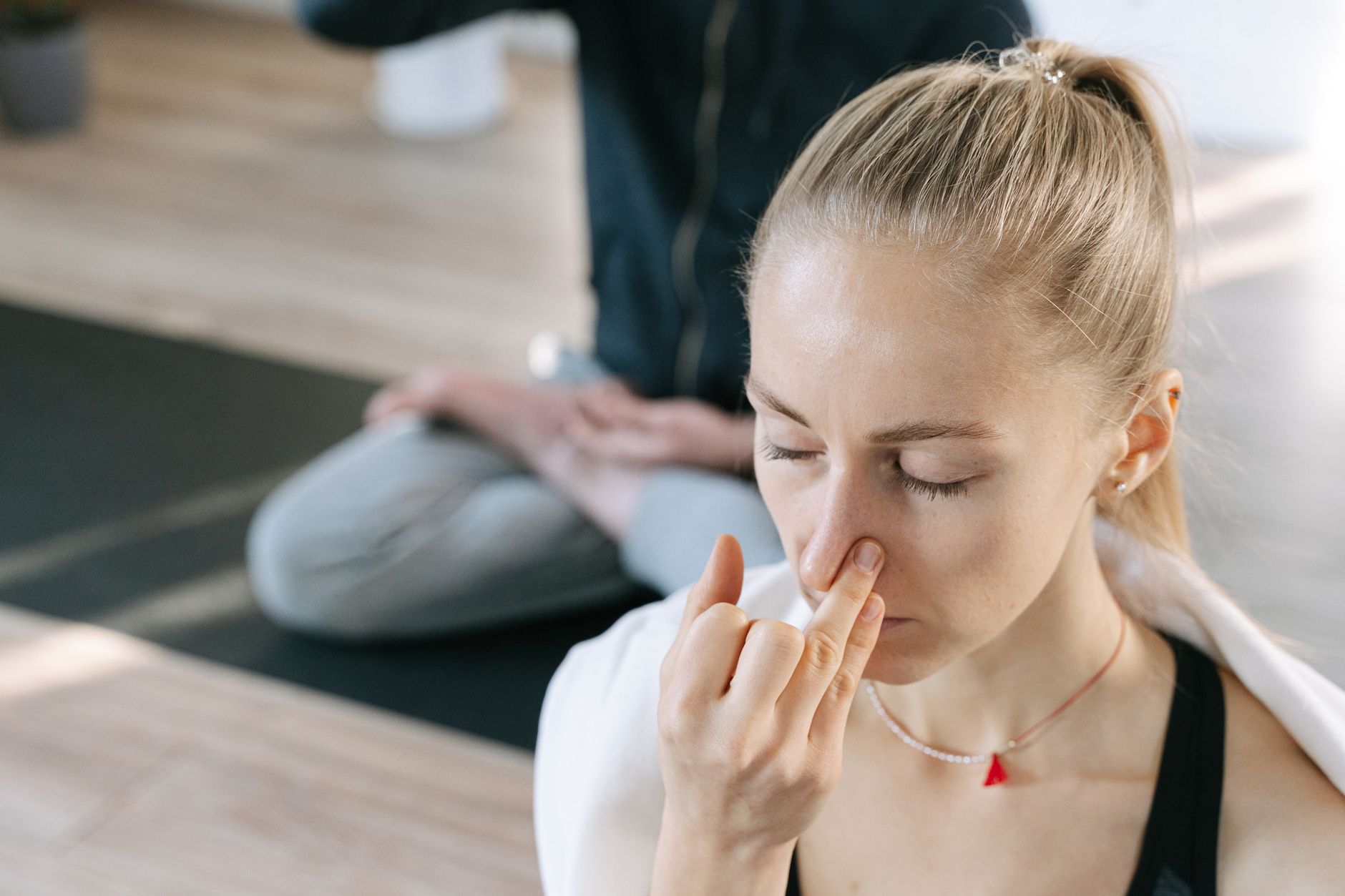 Photo by Ivan S
For days when my nervous system feels too "wired" to settle, pairing breath work with light movement helps. This guide on simple workouts for stress relief explains the mechanical side of that reset in a way busy professionals can use.
My daily plan: one small pause, then I'm done
My plan had to be realistic. If it required a perfect schedule, it would die in a week.
This is what I actually do:
- Mid-morning: 2 minutes of guided breathing, just to keep stress from stacking
- After a hard meeting: 3 minutes, so I don't carry the tension into the next call
- Right before speaking: 1 minute reset, even if it's just long exhales
Streaks help more than I want to admit. Not because I'm trying to "win" wellness, but because consistency makes the calm easier to reach.
Short practice beats long sessions you avoid. Every time.
A simple way to practice before your next big talk
I used to rehearse slides until midnight. Now I train the state I want to speak from.
I like a 10-day build (small steps, no hero moments):
- Days 1 to 3: practice breathing once a day, then read one paragraph out loud
- Days 4 to 6: record a 60-second update, then listen once without judging
- Days 7 to 8: deliver the update to one person (a colleague you trust)
- Days 9 to 10: present to a small group, then use the same 5-minute routine again
This approach works because it teaches your body, through repetition, that speaking isn't danger. It's just a skill with airflow.
If your workplace wants something structured for teams, Pausa also has a business option with guided access and habit features. Still, even alone, the simplest version of the habit is enough to change your next presentation.
Conclusion
Back in that boardroom, five minutes before I spoke, I didn't try to "be fearless." I tried to breathe like someone who was safe.
That's the shift that helped me overcome stage fright: notice the early signs, run a 5-minute pre-talk routine, use stealth exhales and purposeful pauses mid-talk, then practice in small doses so calm shows up faster next time. Above all, keep it short so you'll actually do it.
Try one breathing pattern today, even for a minute. Then, when you're ready to make it consistent, download Pausa and let the guidance carry you through the moments you used to dread.