How to Reduce Stress at Work for Employees (Without Turning Life Into a Wellness Project)
Back-to-back meetings. Nonstop pings. A tight chest you ignore because you "can't be dramatic." Then the smallest thing happens, and your fuse is gone.
That's not weakness. That's a system running hot with no cooldown.
In 2026, the numbers are blunt: multiple US surveys show burnout and high stress hit most workers, often well over half. Stress doesn't stay in someone's head either. It shows up as missed work, worse decisions, lower output, and higher quit rates. If you want a quick snapshot of how widespread this is, see these 2026 workplace stress statistics.
This post is for CEOs and decision makers who want steps employees can use today, plus a few company moves that remove the biggest triggers. Not motivational posters. Not "try yoga."
You'll get three layers:
- In-the-moment tools employees can use between tasks.
- Daily habits that reduce baseline stress.
- Manager actions that stop stress from being the default setting.
One more truth: most wellness tools get ignored. So the bar is simple. Make stress support fast, easy, and actually used.

Photo by Nataliya Vaitkevich
Start with the stressors you can fix in a normal workday
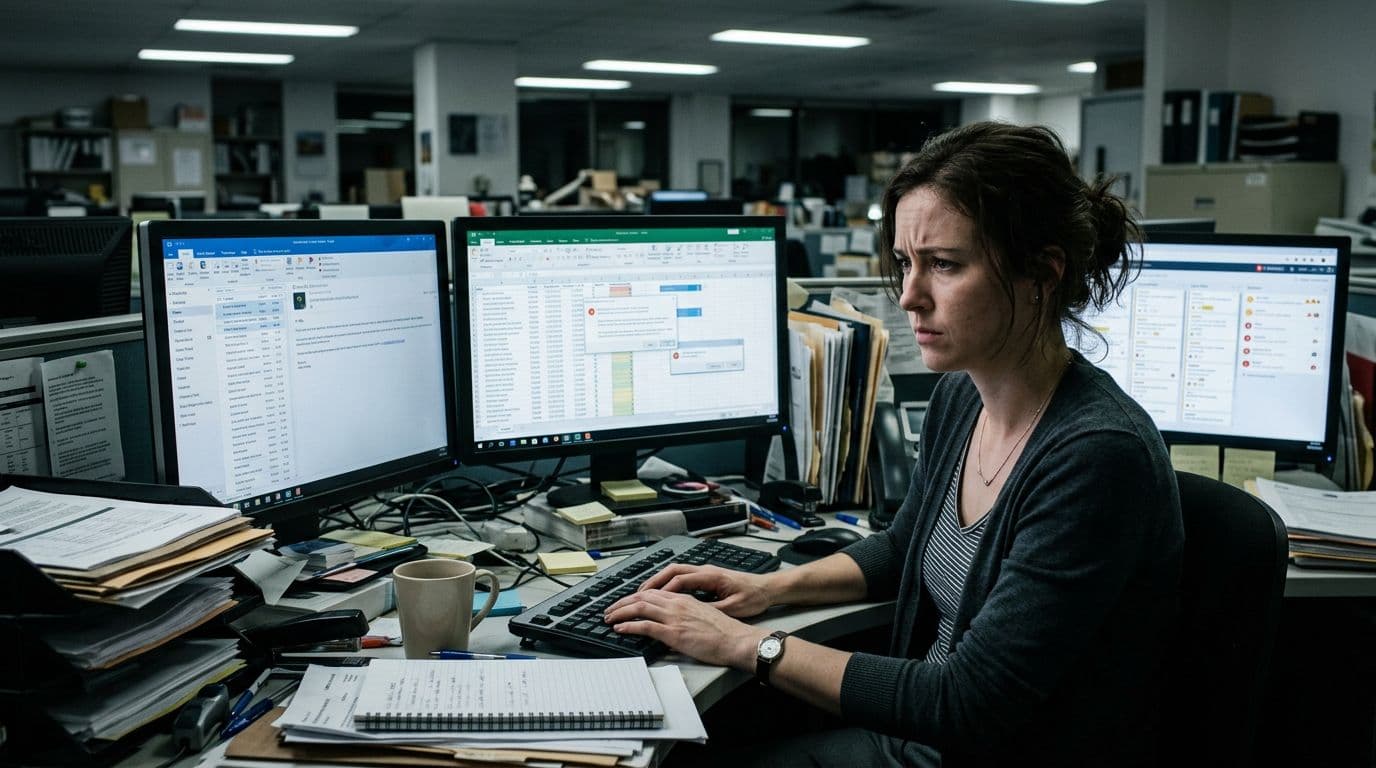
An overloaded desk moment that mirrors how stress stacks up at work, created with AI.
Workplace stress isn't always "big." Usually it's small friction, repeated all day.
No transition time. Too many open loops. A to-do list that reads like a threat. Meanwhile, the body keeps score. Heart rate up. Jaw tight. Shallow breathing. You keep working anyway, so the stress keeps compiling.
The fix isn't a life overhaul. It's small recovery built into the day, like adding airflow to an overheating machine.
Here's the principle: small pauses add up. You don't need to "be a meditator." Not everyone meditates, but everyone breathes. That's the simplest lever you have when the day won't slow down.
Also, don't ignore job design. OSHA is clear that work organization and job design can drive stress, and that practical changes matter. Their workplace stress solutions for workers are worth skimming because they focus on basics, not vibes.
Do a 2-minute reset between meetings (before stress stacks up)
Stress loves one thing: no gaps.
When a meeting ends and the next begins instantly, your brain never closes the previous tab. You carry tension forward, then call it "a busy week." After a month, that's not a week. That's your new operating temperature.
Try this between meetings. Two minutes. No special gear.
- Stand up, even if you feel silly. Put both feet down.
- Drop your shoulders on purpose. Unclench your tongue from the roof of your mouth.
- Breathe slower than you want to. In through the nose, out through the mouth, for 6 to 8 slow cycles.
- Name the next task in plain words: "Next, I'm writing the outline." Not "catch up."
- Drink water. Then sit down.
That's it.
This works best because it's physical. You're telling your nervous system, "We're not being chased." Short guided breathing can help here too, especially for people who hate anything that sounds like meditation.
Make your to-do list smaller, not just better organized
Most employees don't need a prettier list. They need a shorter one.
Overload is one of the most common burnout drivers across major surveys. When everything is "top priority," the brain treats everything as a threat. Then focus dies, and stress rises.
Use a smaller-list method that fits real work:
- Pick three priorities for today, not ten.
- Break one scary task into the next tiny step. Not the whole plan. The next step.
- Set a "good enough" finish line. Perfection is a stress addiction.
- Close tabs. Open loops multiply anxiety.
Leaders can help by making renegotiation normal. Employees also need a sentence they can actually say without sounding fragile:
"I can deliver A by Friday, but if B is also due, I need you to pick which one matters most."
That line isn't attitude. It's risk management.
Fast breathing tools employees can use right when anxiety hits

A simple, private breathing reset in a work setting, created with AI.
Breathing isn't a personality trait. It's biology.
When anxiety spikes, people often breathe fast and shallow. The body reads that as danger and keeps the alarm on. Slower, more controlled breathing can nudge the system toward "safe enough," which makes thinking easier.
No, it won't erase hard problems. It can reduce the body noise around them.
If you want a simple option that's built for short moments, not long rituals, Pausa fits the gap. It was created after its founders experienced panic attacks and went looking for something that worked without turning life into homework. Pausa focuses on guided breathing to reduce stress and anxiety, sleep better, and cut screen-time spirals. Employees can try it here: download Pausa.
For a broader view on why stress drives absence and performance issues, this guide to reducing workplace stress lays out the business impact in plain terms.
Pick a breathing pattern that matches the moment (calm, focus, or energy)
Don't use one tool for every job. Match the pattern to the need.
Box breathing (steady calm and focus)
Good before a presentation or a tough conversation.
Breathe in 4 seconds, hold 4, out 4, hold 4. Repeat for 1 to 3 minutes.
Resonant-style slow breathing (downshift after stress)
Good after a hard email, conflict, or a mistake.
Breathe in 5 to 6 seconds, out 5 to 6 seconds, for 3 to 5 minutes.
Physiological sigh (quick release)
Good when you feel a sudden spike and need relief fast.
Take a deep inhale, then a second small top-up inhale, then a long slow exhale. Do 2 to 5 rounds.
More intense energizing breathing (optional)
Some people use Wim Hof-style breathing to feel alert. Use caution and keep it gentle. If it feels uncomfortable, skip it.
Safety note: If anyone feels dizzy or tingly, stop and return to normal breathing. No technique is worth forcing.
These are not performance hacks. They're regulation tools. That's why they work in normal clothes, at a normal desk, on a normal Tuesday.
Use guided breathing so employees do not have to guess what to do
Most people don't fail because they "don't care." They fail because they can't decide what to do when stress is already loud.
Guidance reduces friction. It also reduces shame because someone is walking you through it, not judging you.
Pausa is built around that idea:
- Short audio-guided breathing sessions that work from day one.
- Mood-based recommendations, so employees can choose stress, focus, energy, or calm and get a matching session.
- Smart screen-time locks that interrupt endless scrolling and redirect into a breathing moment.
- Streaks that make consistency social and visible, without making it performative.
- A simple 10-day journey that teaches the basics in small steps.
This matters because most wellness tools are ignored. Pausa's design goal is the opposite: fewer steps, fewer decisions, more follow-through. Also, it doesn't require someone to "be into meditation." It meets people where they are.
What leaders can change so employees feel less stressed at work

A team meeting with calmer signals and clearer pacing, created with AI.
Employee tools help. Still, leaders control the environment those tools live in.
If the system keeps producing overload, you'll keep buying "stress management" and wondering why nothing changes. Fix the inputs.
Start with listening, but keep it tight. Use a short anonymous pulse survey every month for one quarter. Ask about workload, clarity, and recovery time. Then publish what you'll change. Silence breeds cynicism.
Also, protect privacy expectations. People won't use tools that feel like monitoring. If you do offer wellbeing reporting, keep it fully anonymized, and communicate that clearly.
For more employer-side ideas, HRMorning has a practical list of ways employers can reduce stress. Use it as a menu, then pick the few changes you'll actually enforce.
Reduce the biggest stress triggers: overload, unclear priorities, and no recovery time
You can make meaningful changes in two weeks. Not perfect. Real.
Set these rules and treat them like production standards:
- Cap meeting blocks, especially for managers who create meeting gravity.
- Add 5-minute buffers by default. No exceptions unless it's urgent.
- Establish team priority rules. For example, "Only one P0 at a time."
- Define what can wait, in writing.
- Protect lunch breaks. Not "eat while on Zoom."
- Normalize a pause after hard calls, like customer escalations or layoffs.
One policy line you can send today:
"If your calendar has more than 4 hours of meetings, you can decline new ones unless I approve."
That sentence will upset the wrong people. Good.
Clarity is calming. Ambiguity is expensive.
Offer a simple tool employees will actually use (and keep data private)
Perks fail when they require motivation. Stress already steals motivation.
A better model is B2B2C: the company provides access, and employees get something personal, private, and fast. That's what Pausa Business is built for.
How it works is simple:
- The company buys access and sets up the organization quickly.
- Employees download the app on iOS or Android.
- They start using guided breathing immediately, no training required.
The outcomes you care about are practical too: lower perceived stress, better focus during intense days, and real adoption because the tool doesn't feel like another chore. Reporting stays anonymized, which protects trust.
If you're building a program and want fewer gimmicks, start with wellbeing initiatives employees actually use and then map it into an execution plan with a practical wellbeing program rollout. Also, if you're hiring, stress questions come up fast, and it helps to have a grounded answer. This piece on managing stress in job interviews is a useful reference.
Tools should feel like assistance, not surveillance. They should also feel like companionship, not a lecture. When someone is anxious, being guided for three minutes can matter more than a 60-minute webinar.
Conclusion
Reducing stress at work for employees doesn't require a new identity. It requires better defaults.
On the employee side, push micro-resets between meetings, smaller daily priority lists, and breathing tools that work in real time. When anxiety hits, the goal isn't to "win." It's to return to steady.
On the leader side, remove the big triggers: overload, unclear priorities, and zero recovery time. Then offer a tool people will actually use, with privacy that earns trust.
This week, pick one employee habit to promote (the 2-minute reset works). Also pick one system change to pilot for 30 days (meeting buffers are a strong start). Measure it with a short anonymous pulse survey, then adjust.
Stress isn't a culture. It's a signal. Treat it like one, and the whole org gets sharper.